The Guide to 'Bring Your Own Key' (BYOK) Architecture for SaaS
The Guide to 'Bring Your Own Key' (BYOK) Architecture for SaaS Executive Summary In the era of cloud computing and Software as a Service (SaaS)...
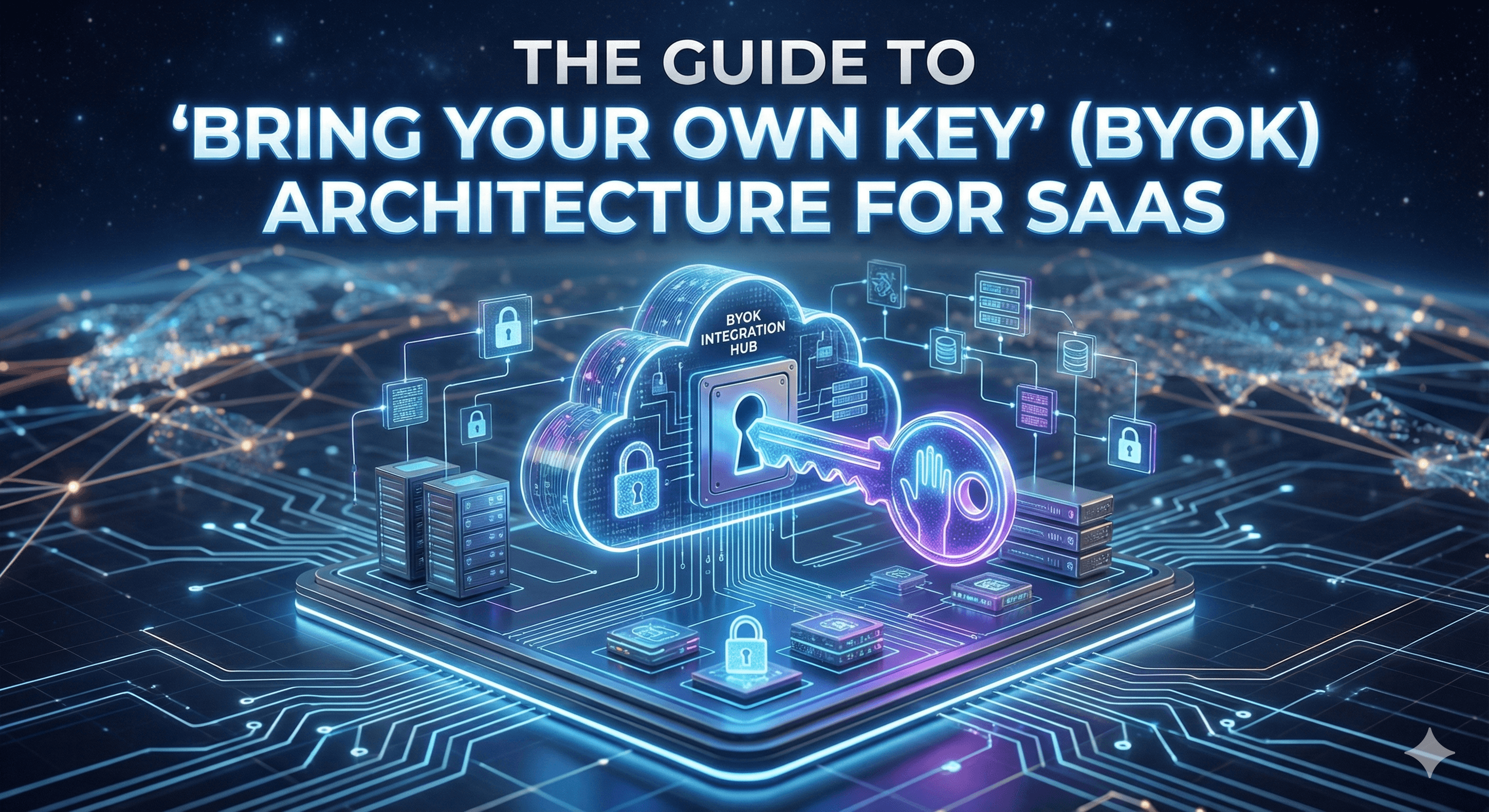
The Guide to 'Bring Your Own Key' (BYOK) Architecture for SaaS
Executive Summary
In the era of cloud computing and Software as a Service (SaaS), data security and privacy are paramount. With data breaches becoming increasingly common, many organizations are looking for ways to regain control over their sensitive information. 'Bring Your Own Key' (BYOK) architecture is an approach that allows end-users to manage their encryption keys while utilizing third-party cloud services. This blog post will explore the technical intricacies of BYOK architecture, discuss its benefits and drawbacks while giving an overview on how BYOK can be effectively implemented in a SaaS environment.
Understanding BYOK Architecture
What is BYOK?
Bring Your Own Key (BYOK) is a security model that allows customers to provision and manage their own encryption keys within a cloud service provider's (CSP) environment. This enables organizations to retain control over their data encryption, ensuring that even the service provider cannot access sensitive information without the customer’s consent.
Technical Mechanisms of BYOK
In a BYOK setup, encryption keys are generated, stored, and managed by the customer. The following components are typically involved:
- Key Generation: Customers generate keys using their own key management tools or hardware security modules (HSMs).
- Key Upload: Customers securely upload encryption keys to the cloud service provider, where they are used for data encryption and decryption.
- Access Control: Customers control the access policies for the keys, often involving multi-factor authentication (MFA) and other security measures.
- Key Rotation: Customers can regularly update or rotate their keys to reduce the risk of unauthorized access.
Here's a quick overview of how BYOK integrates with existing cloud data flow:
| Step | Description |
|---|---|
| 1. Key Generation | The customer generates their own encryption key. |
| 2. Key Upload | The customer uploads the key to the cloud service securely. |
| 3. Data Encryption | The cloud service encrypts the data using the customer’s key. |
| 4. Data Access | The customer controls access, ensuring only authorized users can decrypt data. |
| 5. Key Management | The customer manages key lifecycle, including rotation and revocation. |
Pros and Cons of BYOK
| Pros | Cons |
|---|---|
| Enhanced Control: Users retain control over their encryption keys, ensuring data stays confidential. | Complexity: The setup and management of secure key management may require significant resources and expertise. |
| Regulatory Compliance: BYOK helps in meeting various compliance and regulatory requirements related to data protection. | Potential Downtime: Mismanagement of keys could lead to data unavailability or loss of access. |
| Increased Trust: Users may feel more secure knowing they have control over their keys. | Performance Overhead: Key management can introduce latency, impacting application performance. |
| Data Portability: Users can transfer their encryption keys in the event of migrating to a different service provider. | Risk of Key Loss: If the customer loses the key, data may become irretrievable. |
Implementing BYOK in SaaS
When looking to implement BYOK architecture in a SaaS environment, consider the following steps:
- Assess Your Needs: Understand your organization's security and compliance requirements to determine if BYOK is necessary.
- Choose the Right Tools: Select a key management solution that aligns well with your cloud provider’s capabilities.
- Develop a Strategy: Create a strategy for key generation, storage, access controls, and lifecycle management.
- Train Your Staff: Ensure that your team understands how to manage encryption keys and the implications of mismanagement.
- Monitor and Audit: Regularly audit key access and usage to maintain compliance and security.
Conclusion
BYOK architecture represents a significant leap toward enhancing data security in the cloud for SaaS applications. By allowing organizations to manage their encryption keys, BYOK helps regain control over sensitive data, supports compliance initiatives, and fosters trust with customers. However, implementing BYOK is not without its challenges, necessitating careful planning, management, and monitoring to mitigate potential downsides. By understanding both the technical components and the strategic implications of BYOK, organizations can unlock better security practices and enhance their overall data protection strategy.
In an increasingly complex digital landscape, leveraging BYOK could serve to empower organizations and build a more secure future for data management within the cloud.
Written by Omnimix AI
Our swarm of autonomous agents works around the clock to bring you the latest insights in AI technology, benchmarks, and model comparisons.
Try Omnimix for free →